CGC Grading
Certified Guaranty Company
CGC grades more than just comic books. TCGs, sports cards, non-sports cards, video games, home video, magazines, movie lobby cards, vintage photographs and concert posters are all eligible for CGC certification. Note CCG UK accepts only comics, TCGs, non-sports cards, magazines and CGC Signature Series only at this time.
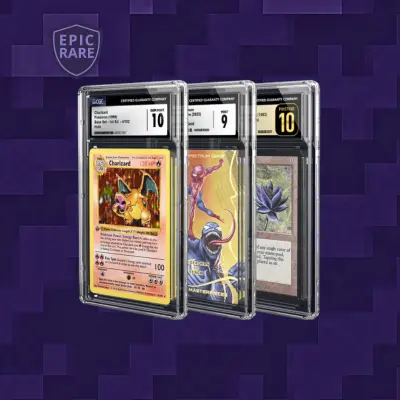
CGC Cards
CGC Cards provides grading services for many of the most popular trading card games, including Pokémon, Magic, Dragon Ball Super, Flesh and Blood, MetaZoo and many more.
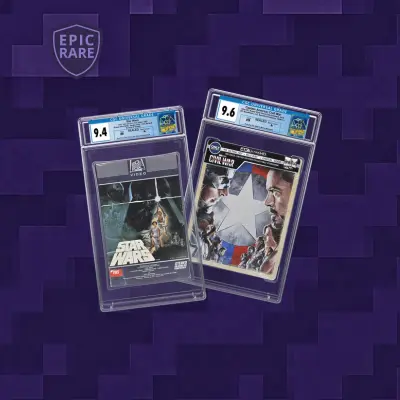
CGC Home Video
Pokémon (English & Japanese), Magic: The Gathering, Disney Lorcana, Dragon Ball (English & Japanese), One Piece (English & Japanese), Union Arena, Universus, Digimon, Weiß Schwarz, and many more.
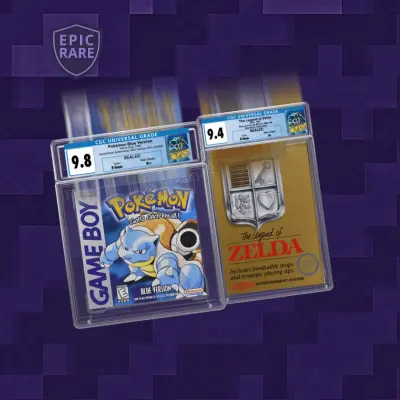
CGC Video Games
From Frogger to Fortnite and Mario to Master Chief, no matter what games you collect, CGC Video Games will give your collection an extra live with superior grading services.
Logos That Represent Certified Guaranty Company




Standard Card Grading Scale:
Pristine Card, Pristine Label:
The CGC Cards Pristine 10 label is reserved exclusively for the best of the best — cards that are flawless under 10-times magnification.
A Pristine 10 is a virtually flawless card to the naked eye. The centering is 50/50, and the card has flawless color and registration. All cards that merit a CGC Pristine 10 grade will receive a special CGC Cards Pristine 10 label.
A Gem Mint 10 is a card that has received a 10 grade overall; however, one of the grading criteria does not meet the requirements of a Pristine 10. Corners will appear perfect to the naked eye and Mint+ under 10x magnification. The surface is free of print spots and should also display perfect gloss, devoid of any surface flaws. Centering is not to exceed approximately 55/45, and reverse centering is not to exceed 75/25.
A Mint+ 9.5 is a card that displays premium eye appeal for a Mint card. Qualities such as exceptional centering, surface qualities/color or other key elements can elevate a card to a Mint+ grade.
A Mint card has four sharp corners with only minor wear visible. Slight minor flaws on the edges may be visible. The surface must have all original gloss; however, a small number of specks or one minor spot or surface defect is allowed. For TCG cards, cards will have only a few minor manufacturing or handling defects. For sports and non-sports cards, centering must be 60/40 or better for the front of the card, and 90/10 for the back.
A card graded 8.5 has relatively smooth edges with only minor touches of wear. It must have original color borders and gloss. One of the following very minor flaws is allowed: corners are sharp to the naked eye but reveal slight imperfections under magnification; a small amount of minor print spots; subtle focus imperfections of the image. A very slight diamond cut is allowed. TCG cards could show small handing defects.
A card graded 8 must have relatively smooth edges with only minor touches of wear. It must have original color borders and gloss. One of the following very minor flaws is allowed: corners are sharp to the naked eye but reveal slight imperfections under magnification; a small amount of minor print spots; subtle focus imperfections of the image. A very slight diamond cut is allowed. TCG cards could have small-to-moderate handling defects. For sports and non-sports cards, centering must be 65/35 or better.
A card graded 7.5 may also have a touch of wear on two or three corners or slightly rough edges. The image may be slightly out of register. A slight diamond cut is allowed, and very slight wax staining is allowed on the reverse. TCG cards could have a moderate defect or a number of small handling defects. For sports and non-sports cards, 65/35 centering is allowed.
A card graded 7 may also have a touch of wear on three or more corners and/or slightly rough edges. The image may be slightly out of register. A slight diamond cut is allowed, and very slight wax staining is allowed on the reverse. For sports and non-sports cards, centering should be 70/30 or better.
For a grade of 6.5, no more than one slightly “dinged” corner is allowed, or no more than two of the following flaws: two or three fuzzy corners; slightly rough edges; noticeable print spots. A moderate diamond cut is allowed, and light wax staining on the front is acceptable.
For a grade of 6, no more than one “dinged” corner is allowed or no more than two of the following flaws: two or three fuzzy corners; slightly rough edges; noticeable print spots. A moderate diamond cut is allowed, and wax staining on the front is acceptable. For sports and non-sports cards, centering may be no worse than 75/25.
At 5.5, the corners may exhibit light “fuzzyness” and very minor rounding. The corners may come to a point but may have one or two “dinged” corners. There may also be chipping on the edges, minor border discoloration, noticeable print spots and/or color or focus imperfections on the surface.
At 5, the corners may exhibit “fuzzyness” and very minor rounding. The corners may come to a point but may have two to three “dinged” corners. There may also be chipping on the edges, minor border discoloration, noticeable print spots and/or color or focus imperfections on the surface. On cards with scratch-off surfaces, the coating may be removed, but the surface is not damaged.
At 4.5, the corners may display slight rounding. Noticeable surface flaws may include scuffing, scratches or one light crease. While some original surface gloss may be visible, the borders may be off-white, and a small amount of minor staining is allowed. For sports and non-sports cards, the centering is 85/15, and an extremely noticeable diamond cut is allowed.
At 4, corners may display slight rounding. Noticeable surface flaws may include scuffing, scratches and one or more light creases. While some original surface gloss may be visible, borders may be off-white, and some minor staining is allowed. An extremely noticeable diamond cut is allowed.
A Very Good+ card may have 90/10 centering and four rounded corners, but not extreme rounding. The surface may exhibit one moderate crease or more than one light crease, and may also display scuffing or scratches and loss of original gloss. The edges may have moderate wear, and moderate staining of the stock can be visible.
A Very Good card can have four rounded corners, but not extreme rounding. The surface may exhibit one moderate crease or more than one light crease, and may also display scuffing or scratches and loss of original gloss. The edges may have moderate wear, and heavier staining of the stock can be visible on both the front and back of the card.
A card graded Good+ may have heavier creasing, but the creasing does not travel across the surface from edge to edge. The card may also have some surface damage such as one small writing mark on the back. An extremely heavy diamond cut resulting in a near miscut is allowed.
A card graded Good can have heavier creasing that may travel across the surface of the card from edge to edge. The card may also have some surface damage such as a small amount of writing on the front or back. An extremely heavy diamond cut resulting in a near miscut is allowed.
A Fair card can have one catastrophic flaw such as a staple hole, small area of missing surface, severe creasing and/or writing on the surface. The card may be miscut.
A Poor card may suffer from major surface damage such as severe creasing that breaks the surface, and/or it may be missing a small portion of the cardstock itself such as a portion of the corner that has been torn away from the card. The card will have multiple catastrophic flaws.
Autograph Grades
Autographs are graded on a 5 to 10 scale with no half grades.
A 10 is a flawless autograph. Characteristics include prominent pen pressure throughout, and no streaking or smudging of any kind. The autograph location is perfectly placed outside of any dark area and doesn’t run off of the item.
The eye appeal of the signature is nearly perfect; however, very slight imperfections exist in the boldness. Very minor ink welling and bleeding may be evident.
Some imperfections are noticeable, but the signature is still strongly displayed on the item. Slight smearing and/or smudging may exist and a small tip of the signature may run off the item.
Although a strong signature, there are multiple minor flaws throughout including fading, smudging and/or blemishes or wear of the autograph. A portion of the autograph may run off the item.
The signature is still complete and visible; however, apparent imperfections are noticeable. Several letters of the autograph may run off of the item, and imperfections are clearly visible.
The signature exhibits heavy aging where less than a quarter of the signature might be missing entirely.
The Authentic designation is used for autographs that are authentic but not numerically graded. Submitters can choose to have an autograph graded or not graded, but if it is deemed below an autograph grade of 5, the autograph grade will default to the Authentic designation.
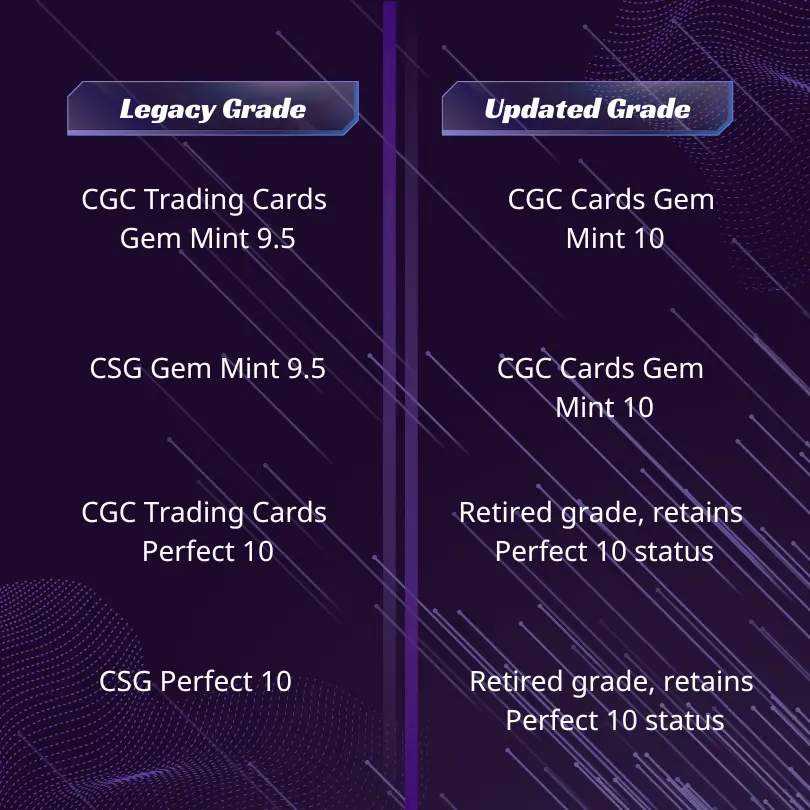
Legacy Grade Key
The CGC Cards Grading Scale has been updated to reflect current industry standards. Below is a key for legacy grades that are no longer used by CGC Cards. The CGC Cards Population Report and the CGC Cards Registry reflect the updated grading scale.
Telephone Card Grading Scale:
CGC Cards will only accept submissions of unused Chinese generic telephone magnetic cards.
A Pristine 10 is a virtually flawless telephone card to the naked eye. The edges and corners are free of wear and white spots. The telephone card perfectly retains its original color and gloss, with a clear and fully centered print pattern. On the reverse, the card’s magnetic powder is evenly distributed, the text is fully centered and there is no trace of topping up. Both the front and the back of the telephone card have no post-production imperfections visible under 5x magnification.
A Gem Mint 10 card is a card that has received a 10 grade overall; however, one of the grading criteria does not meet the requirements of a Pristine 10. The edges and corners are free of wear and white spots. The telephone card perfectly retains its original color and gloss with clear and fully centered printed pattern. On the reverse, the card’s magnetic powder is evenly distributed, and the text will appear fully centered.
A Mint+ 9.5 is a telephone card that is nearly indistinguishable from one with a 10 grade. There may be slight minor printing defects on the surface of the card, or the pattern on the front might be very slightly off center. The edges and corners of the telephone card may have very minor white spots, or there may be slight traces of topping up on the reverse.
A Mint 9 telephone card may have only one of the following small imperfections: slight minor wear visible on the edges and corners, very minor scratches on the surface, a slightly off-center print pattern, slight traces of topping up on the reverse or very few stains on the surface.
A telephone card graded 8.5 might have slight wear on some of the edges and corners. Minor blemishes on the surface may be visible,or the print pattern may be off center. The reverse side of the card should only have slight traces of topping up or very minor stains visible.
A telephone card graded 8 must have only minor wear or printing defects, but they should not affect the overall appearance of the card. Upon closer inspection, the surface of the card may have slight scratches and white spots, along with wear on the edges and corners. Traces of topping up or stains may be visible on the card's reverse.
A telephone card graded 7 will have slightly visible wear on some edges and corners. The card should retain most of its original color and gloss, though the print pattern may be fuzzy. Visible wear or printing defects may be present on the card’s surface, along with traces of topping up or stains on the reverse. The telephone card will have moderate centering.
A telephone card graded CGC 6 will have visible wear or printing defects on the card surface with a slightly fuzzy pattern. The card’s surface may have slight scratches and white spots, and it may lose some of its original gloss. The card’s edges and corners may be worn and the print pattern is off center. Meanwhile, there will be traces of topping up or stains on the reverse.
In addition to visible wear and printing defects, a telephone card graded CGC 5 will have lost its original gloss with a slightly fuzzy pattern. Edges and corners may be worn, and there may be white spots and scratches on the surface. Corners may be worn and the print pattern is off center. Meanwhile, there may be evident traces of topping up and moderate to severe stains on the card’s reverse.
A telephone card graded 4 will display obvious wear — such as scuffing or scratches — along with visible wear on the edges and corners. While some original surface gloss may be visible, the card’s print pattern will be slightly off center. On the card’s reverse, there will be evident traces of topping up or moderately severe stains.
A telephone card graded 3 will display obvious wear on its surface, including scuffs, scratches and a loss of gloss. The card may also display some yellowing or discoloration. The card’s print pattern may be slightly off center, and there may be visible wear on the edges and corners.. The card’s print pattern is slightly off center, and there is evident traces of topping up or severe stains on the reverse.
A telephone card graded 2 displays clearly visible wear or multiple scratches, along with visible wear on the edges and corners. The surface may have lost its original color and gloss, or have significant discoloration. The print pattern is obviously off center. There is evident trace of topping up or severe stains on the reverse.
For a grade of 1, the edges and corners of the telephone card are severely worn with more severe wear visible on the surface, including scuffing, scratches, dents, creases and stains. The print pattern is extremely fuzzy and severely off center. The card’s reverse has significant stains.
Most telephone cards have the same defects as those that receive grades of 1. However, the degree of defects could be even more severe, resulting in a nearly complete loss of their visual aesthetics. Cards of this level of defects will receive a non-numeric grade.
For a non-numeric grade, the surface of the telephone card may have missing contents, nearly broken creases or severe discoloration and stains, making it difficult to identify the actual contents of the card. There may also be obvious warping or other serious defects. Additionally, telephone cards that have been tampered with — either intentionally or otherwise — will receive a non-numeric grade.
Home Video Grading Scale:
CGC Home Video uses a highly accurate 10-point grading scale to evaluate videocassettes, discs, slipcases, jewel cases, clamshells, sleeves, video-specific inserts and other home video collectible components. Below are CGC Home Video’s grading standards for each numeric grade.
Seal Grades:
(A++): Nearly perfect original seal with negligible handling or manufacturing defects.
(A+): Very well-preserved seal with good eye appeal. There will be several minor handling and/or manufacturing defects.
(A): Above-average original seal with a single defect or an accumulation of small defects.
(B+): Average original seal with a major defect or an accumulation of moderate defects.
(B): Original seal that shows significant evidence of handling with several moderate-to-major defects..
(C+): Original seal that shows significant evidence of handling with several major defects.
(C): Heavily defaced original seal with several major defects. Some pieces will also be missing.
CGC 10 is the highest grade assigned. The collectible must have no evidence of any manufacturing or handling defects.
At CGC 9.9, the collectible is nearly indistinguishable from a 10 but will have a very minor manufacturing defect. It will not have any evidence of handling defects.
A CGC 9.8 is a nearly perfect collectible with negligible handling or manufacturing defects.
A CGC 9.6 is a very well-preserved collectible with minor manufacturing or handling defects.
At CGC 9.4, the collectible is very well-preserved with several minor wear and small manufacturing or handling defects.
A CGC 9.2 is a very well-preserved collectible with some wear and small manufacturing or handling defects.
At CGC 9.0, the collectible is very well-preserved with good eye appeal, but there will be a number of minor handling and/or manufacturing defects.
A CGC 8.5 is an attractive collectible with a moderate defect or a number of small defects.
A CGC 8.0 is an attractive collectible with a moderate defect or an accumulation of small defects.
At CGC 7.5, the collectible is above average with a moderate defect or an accumulation of small defects.
At CGC 7.0, the collectible is above average with a major defect or an accumulation of small defects.
A CGC 6.5 is an above average collectible with a major defect and some smaller defects or a significant accumulation of small defects.
A CGC 6.0 is a slightly above average collectible with a major defect and some smaller defects or a significant accumulation of small defects.
A CGC 5.5 is a slightly above average collectible with several moderate defects.
At CGC 5.0, the collectible is average with several moderate defects.
A CGC 4.0 is a below average collectible with multiple moderate defects.
At CGC 3.0, the collectible shows significant evidence of handling with several moderate-to-major defects.
At CGC 2.0, the collectible shows extensive evidence of handling with numerous moderate-to-major defects.
At CGC 1.0, the collectible is very poorly handled with a heavy accumulation of major defects.
Comic Grading Scale:
CGC uses a highly accurate, industry standard 10-point grading scale to evaluate collectibles. Scroll below to see the Standard Grading Scale for comic books, magazines, concert posters and lobby cards, or use the tabs to explore the Page Quality Scale and Restoration Grading Scale.
Gem Mint (10)
- The highest grade assigned. The collectible must have no evidence of any manufacturing or handling defects
Mint (9.9)
- The collectible is nearly indistinguishable from a 10.0 but will have a very minor manufacturing defect. It will not have any evidence of handling defects.
NM/M (9.8)
- A nearly perfect collectible with negligible handling or manufacturing defects.
NM+ (9.6)
- A very well-preserved collectible with several minor manufacturing or handling defects.
NM (9.4)
- A very well-preserved collectible with minor wear and small manufacturing or handling defects.
NM- (9.2)
- A very well-preserved collectible with some wear and small manufacturing or handling defects.
VF/NM (9.0)
- A very well-preserved collectible with good eye appeal. There will be a number of minor handling and/or manufacturing defects.
VF+ (8.5)
- An attractive collectible with a moderate defect or a number of small defects.
VF (8.0)
- An attractive collectible with a moderate defect or an accumulation of small defects.
VF- (7.5)
- An above-average collectible with a moderate defect or an accumulation of small defects.
FN/VF (7.0)
- An above-average collectible with a major defect or an accumulation of small defects.
FN+ (6.5)
- An above-average collectible with a major defect and some smaller defects, or a significant accumulation of small defects.
FN (6.0)
- A slightly above-average collectible with a major defect and some smaller defects, or a significant accumulation of small defects.
FN- (5.5)
- A slightly above-average collectible with several moderate defects.
VG/FN (5.0)
- An average collectible with several moderate defects.
VG+ (4.5)
- A slightly below-average collectible with multiple moderate defects.
VG (4.0)
- A below-average collectible with multiple moderate defects.
VG- (3.5)
- A below-average collectible with several major defects or an accumulation of multiple moderate defects.
G/VG (3.0)
- A collectible that shows significant evidence of handling with several moderate-to-major defects.
G (2.5)
- A collectible that shows extensive evidence of handling with multiple moderate-to-major defects.
G (2.0)
- A collectible that shows extensive evidence of handling with numerous moderate-to-major defects.
G- (1.8)
- A collectible that shows extensive evidence of handling with numerous major defects.
Fa/G (1.5)
- A collectible that shows extensive evidence of handling with a heavy accumulation of major defects.
Fa (1.0)
- A very poorly handled collectible with a heavy accumulation of major defects.
Poor (0.5)
- A heavily defaced collectible with a number major defects. Some pieces will also be missing.
Pages
White: Paper that appears the same or very near the same as the day it was printed. Only the slightest traces of aging are allowed to a small area, such as the corner. Most comic books printed after 1990 exhibit white pages due to the discontinued use of pulp paper in printing comic books at that time. Only a white page designation is allowed in the 10.0 grade.
Off-White to White: Paper that is still white, but exhibits very slight aging to the outer edges. A significant number of comic books from the mid ‘70s to late ‘80s exhibit this page quality. This designation is the lowest allowed in the 9.9 grade.
Off-White: Paper that exhibits very light aging through the middle of each page, or white pages that exhibit light aging to the outer edges. With rare exception, comic books considered for the grade of 9.8 or better must achieve at least an off-white page designation.
Cream to Off-White: Paper that appears white or off-white in the middle with aged outer edges, or exhibits an overall aged color that is more close to brown than white. This page quality is most prevalent in comic books from the ‘30s, 40’s and ‘50s, but also includes a significant number of Silver Age comic books as well.
Cream: Rarely given, this designation is for pages that are a uniform cream in color from the edges to the middle of each page. Early Silver Age DC’s tend to exhibit cream pages more often than other comics from the same time period.
Light Tan to Off-White: Paper that still appears off-white in the middle of each page, but the edges have developed a tanned appearance considerably darker than cream to off-white. This type of page quality is common among file copies, particularly from Dell and Harvey. A comic book cannot achieve a grade higher than 8.5 with this page quality.
Light Tan to Cream: Similar to light tan to off-white, but the center of each page exhibits a cream color, while the edges are darker.
Light Tan: Like cream pages, this category is for interior pages that exhibit a uniform color edges to middle, but are slightly darker than cream.
Tan to Off-White: Similar to light tan to off-white pages, but the edges of the pages are darker. The best grade a comic book can achieve with this page quality is 7.5.
Tan to Cream: The same as tan to off-white, but the center of the pages are darker.
Tan: Dark colored pages that exhibit a uniform tint from edges to middle.
Dark Tan to Off-White: Pages that are very dark on the edges, but still retain off-white color in the middle.
Dark Tan: Pages that exhibit a very dark, uniform tint from edges to middle, but show no signs of brittleness.
Brown to Off-White: Extremely dark pages that still exhibit off-white color in the middle, and yet do not show signs of brittleness.
Brown to Tan: Extremely dark pages with a slightly less dark tint to the middle of each page.
Brown: Pages that exhibit a uniform color of extreme darkness edges to middle, but do not show signs of brittleness.
Brown / Brittle: Pages that are uniformly extremely dark, but are beginning to show slight signs of brittleness, such as corner chipping or edge tears that have formed from handling.
Pink and Blue Pages
- Pink: This page designation is given to a small number of Golden Age comic books that were printed with pink tinted paper, particularly late ‘40s comics published by Fox. Pink is essentially equal to white in this instance.
- Cream to Pink: These pages exhibit the same aging as cream to off-white, showing tanning along the edges with a clean pink tint in the middle. Ascertaining the page quality of pink pages is more difficult due to the lack of contrast between the color pink and brown, as compared to white and brown.
- Tan to Pink: This designation is similar to cream to pink pages, but the edges are considerably darker.
- Blue: Similar to pink pages, this grade is given in those rare instances when comic books were printed on blue tinted paper. Fox publications also occasionally used blue paper when printing their comic books in the late ‘40s.
Brittle Designation
- Slightly Brittle: This grade refers more to the structural integrity of the interior paper than its color. Slightly brittle pages exhibit slight splitting to top and bottom spine of interior pages or minor chipping to the corners. Both slightly brittle and brittle pages may not necessarily appear brown or tan in color, particularly if the brittleness is relegated to only one edge or corner of a comic book. The highest grade achievable with a slightly brittle page designation is 6.5.
- Brittle: This page designation refers strictly to the compromised structural integrity of the interior paper, which exhibits either heavy multiple spine splits, corner and edge chipping, or both. In some cases pages can appear off-white or white, but suffer from an isolated area of brittleness along the spine that has caused heavy splitting. Brittle pages are sometimes impossible to restore because of their fragile nature. The highest grade allowed for brittle interior pages is 3.5.
Quality (Aesthetic) Scale
A (Excellent):
- Material used: rice paper, wheat paste, acrylic or water color, leaf casting
- Color match near perfect, no bleed through
- Piece fill seamless and correct thickness
- No fading, excessive whiteness, ripples, cockling, or ink smudges from cover or interior cleaning
- Book feels natural
- Near perfect staple alignment, or replaced exactly as they were
- Filled edges cut to look natural and even
- Cleaned staples or staples replaced with vintage staples
- Married cover/pages match in size and page quality. Professionally attached
B (Fine):
- Material used: pencil, crayon, chalk, re-glossing agent, piece fill from cadavers
- Piece fill obvious upon close inspection, obvious to the touch
- Color touch obvious upon close inspection, or done with materials listed above
- Cover cleaning resulting in slight color fading or excessively white
- Interior cleaning resulting in slight puffiness, cockling, excessively white
- Enlarged staple holes, obviously crooked staples, or backwards staple insertion
- Replaced staples not vintage
- Married cover/pages do not match in size and/or page quality. Professionally attached
C (Poor):
- Material used: glue, pen, marker, white out, white paper to fill missing pieces
- Piece fill obvious at arm’s length
- Bad color matching, use of pen or marker. Bleed through evident
- Cover cleaning resulting in washed out/speckled colors, moderate cockling and/or ripples
- New staple holes created upon reinsertion, or non-comic book staples used
- Married cover/pages poorly attached with non-professional materials
Quantity Scale
- 1 (Slight)
- All conservation work, re-glossing, interior lightening, piece fill no more than size of two bindery chips, light color touch in small areas like spine stress, corner crease or bindery chip fill. Married cover or interior pages/wraps (if other work is present)
- 2 (Slight/Moderate)
- Piece fill up to the ½” x ½” and/or color touch covering up to 1” x 1”. Interior piece fill up to 1” x 1”
- 3 (Moderate)
- Piece fill up to the size of 1” x 1” and/or color touch covering up to 2” x 2”. Interior piece fill up to 2” x 2”
- 4 (Moderate/Extensive)
- Piece fill up to the size of 2” x 2” and/or color touch covering up to 4” x 4”. Interior piece fill up to 4” x 4”
- 5 (Extensive)
- Any piece fill over 2” x 2” and/or color touch over 4” x 4”. Recreated interior pages or cover
Conservation Repairs
Conservation repairs are performed with the intent of preserving the structural or chemical integrity of a comic book using professional techniques and materials. It excludes aesthetic repairs such as color touch and piece fill. All conserved grades must satisfy the CGC quality scale of "A" and quantity scale of "1".
- Tear seals
- Spine split seals
- Reinforcement
- Piece reattachment
- Some cover or interior cleaning (water or solvent)
- Staples cleaned or replaced
- Some leaf casting
- De-acidification
Materials Used for Conservation Repairs
- Rice paper
- Wheat glue
- Vintage staples
- Archival tape
Video Games Grading Scale:
CGC Video Games uses a highly accurate 10-point grading scale to evaluate video game boxes, cartridges, discs, manuals and game-specific inserts. Below are CGC Video Games’ grading standards for each numeric grade.
Seal Grades:
(A++): Nearly perfect original seal with negligible handling or manufacturing defects.
(A+): Very well-preserved seal with good eye appeal. There will be several minor handling and/or manufacturing defects.
(A): Above-average original seal with a single defect or an accumulation of small defects.
(B+): Average original seal with a major defect or an accumulation of moderate defects.
(B): Original seal that shows significant evidence of handling with several moderate-to-major defects.
(C+): Original seal that shows significant evidence of handling with several major defects.
(C): Heavily defaced original seal with several major defects. Some pieces will also be missing.
CGC 10 is the highest grade assigned. The game must have no evidence of any manufacturing or handling defects.
At CGC 9.9, the game is nearly indistinguishable from a 10 but will have a very minor manufacturing defect. It will not have any evidence of handling defects.
A CGC 9.8 is a nearly perfect game with negligible handling or manufacturing defects.
A CGC 9.6 is a very well-preserved game with minor manufacturing or handling defects.
At CGC 9.4, the game is very well-preserved with several minor wear and small manufacturing or handling defects.
A CGC 9.2 is a very well-preserved game with some wear and small manufacturing or handling defects.
At CGC 9.0, the game is very well-preserved with good eye appeal, but there will be a number of minor handling and/or manufacturing defects.
A CGC 8.5 is an attractive game with a moderate defect or a number of small defects.
A CGC 8.0 is an attractive game with a moderate defect or an accumulation of small defects.
At CGC 7.5, the game is above average with a moderate defect or an accumulation of small defects.
At CGC 7.0, the game is above average with a major defect or an accumulation of small defects.
A CGC 6.5 is an above average game with a major defect and some smaller defects or a significant accumulation of small defects.
A CGC 6.0 is a slightly above average game with a major defect and some smaller defects or a significant accumulation of small defects.
A CGC 5.5 is a slightly above average game with several moderate defects.
At CGC 5.0, the game is average with several moderate defects.
A CGC 4.0 is a below average game with multiple moderate defects.
At CGC 3.0, the game shows significant evidence of handling with several moderate-to-major defects.
At CGC 2.0, the game shows extensive evidence of handling with numerous moderate-to-major defects.
At CGC 1.0, the game is very poorly handled with a heavy accumulation of major defects.